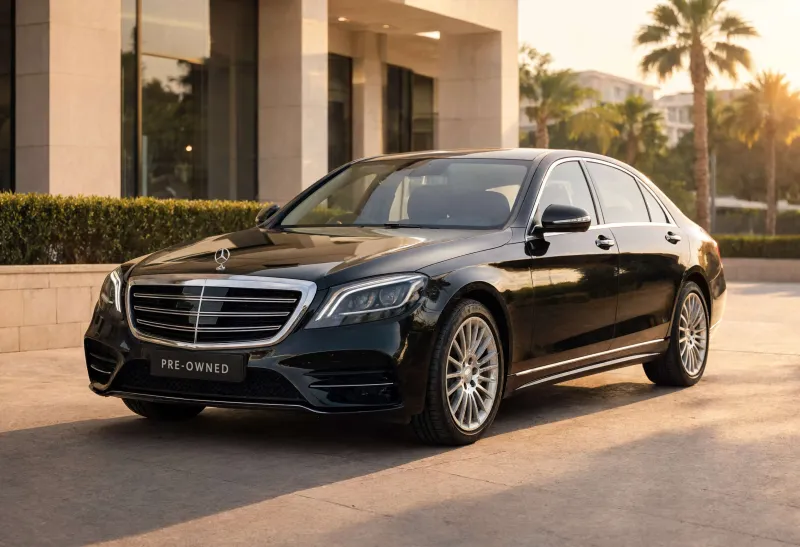
Used Luxury Cars in India: Are They Worth Buy ..
Aug 18 - 2026
Buy Car: +91 99090 06000 | Sell Car: +91 98250 60556 | Car Care & Modification: +91 98250 20746
16
Jun
Here's something no showroom will say out loud: the moment you drive a brand-new Mercedes or BMW past the gate, it starts losing money, and fast. Most luxury cars in India lose somewhere between a third and half of their value in the first three years. If you're the first owner, that hurts. If you're the second, it's the best deal going.
That's really the whole idea behind buying a used luxury car. You're not settling for less car. You're letting someone else pay for the steepest drop in value, then taking the same machine, same engine, same hand-stitched leather, same badge on the bonnet, for close to half of what it cost new.
For years, buying second-hand at this level carried a bit of fear: rolled-back odometers, quiet accident repairs, service books that stopped halfway through. That reputation is mostly outdated now. The pre-owned luxury market has matured, buyers have wised up, and there are solid ways to protect yourself. This guide covers all of it: the maths, where to buy, what to check, and what these cars really cost to keep.
Why luxury cars are such good used buys
Every car loses value. What makes luxury cars different is how they lose it. Regular cars slide down a gentle slope. Premium German saloons fall off a cliff in the first three years, then flatten out, and that cliff is exactly where the smart used buyer steps in.
The numbers tell the story. A luxury car in India typically loses 22 to 28 percent in year one, and close to half its value by the end of year three. So a saloon that cost 70 lakh on the road can be a 35 to 40 lakh car with two or three careful years on it. Same leather, same engineering, same presence, for roughly half the money.
Why do premium badges fall harder than mass-market ones? Three reasons stack up. First, tax: India loads luxury cars with heavy GST and cess, so the sticker price is inflated well above the car's real worth, and that premium simply doesn't carry into the used market. Second, running costs once the warranty ends, which used buyers price in carefully. Third, liquidity, because outside the big cities fewer people are shopping for a 60 lakh car, so sellers discount to move them.
One car bucks the trend worth knowing about: the Mercedes E-Class, especially the long-wheelbase version that India's chauffeur-driven business owners love. It holds 55 to 60 percent of its value after three years, where most rivals lose more. That tells you something useful, because strong resale usually means deep service support, easy parts, and plenty of buyers when you eventually sell. All good signs in a used car.
The market has grown up
This strategy works today in a way it didn't a decade ago, because the whole used-car business cleaned up its act. India's pre-owned car market is set to grow from around 5.9 million cars a year to roughly 9.5 million by 2030, and the luxury slice is moving even faster, growing at about 16 percent a year, well ahead of the new-car market.
Gujarat sits right in the thick of this. Alongside Maharashtra, Delhi and Karnataka, it's one of the states where appetite for pre-owned luxury is climbing fastest, driven by business families in Ahmedabad, Surat and Rajkot who tend to understand value instinctively. It's no accident that Kamdhenu Cars built its pre-owned luxury business out of Ahmedabad, because this is one of the country's strongest markets for exactly these cars.
What really changed the game, though, was certification. Once manufacturers started putting their own name behind used cars, the old fears lost their grip.
Where to buy: your three options
Where you buy shapes everything that follows, including price, warranty, and how much homework lands on you.
Manufacturer certified pre-owned. Mercedes-Benz Certified, BMW Premium Selection and Audi Approved plus are the safest route. Each car goes through a 100 to 150-point inspection, gets refurbished to brand standard, and comes with a manufacturer-backed warranty and verified service history. You pay a premium, usually 30 to 50 percent below the new price rather than rock-bottom used money, but you buy out most of the risk. For a first-time luxury owner, that premium is rarely wasted.
A trusted specialist dealer. This is the smart middle ground, and it's where Kamdhenu Cars fits. A good specialist hand-picks its stock, prices sharper than the factory programme, and at the better ones runs its own inspection, offers warranty options, and shows you the full paperwork. The whole thing runs on trust. A dealer who hands you the complete service history and lets you bring an independent inspector is giving you confidence. One who gets cagey about a car's past is telling you to look elsewhere. That's the standard we hold ourselves to.
Online marketplaces. Widest choice, sharpest prices, but all the due diligence is on you. Treat a marketplace as a place to find cars, not a place to switch off your judgement. Whatever the listing says, the inspection still has to happen.
What to check before you pay
A used luxury car tells its story to anyone who knows where to look. Most buyers stare at the paint and the kilometre reading. The expensive truths hide elsewhere. Run through this list, ideally with an independent inspection alongside, before any money changes hands:
What it actually costs to own
The purchase price is the start of the conversation, not the end. Luxury cars are cheap to buy used and expensive to keep, and the people who get burned almost always budgeted only for the buying.
The figure to understand is the out-of-warranty cliff. While the car's under warranty, costs are predictable. Once that cover lapses, a German or British luxury car becomes a different animal. A major service at an authorised centre can run 60,000 to 1.2 lakh, and a single failed part can wipe out a year's worth of the savings that drew you to the car in the first place.
Three moves keep this in check. Buy a car with warranty left, or budget for an approved extended warranty. Price the insurance realistically, because luxury cover isn't trivial. And set aside a yearly maintenance buffer instead of treating every service as a nasty surprise. Owned on a proper budget, a used luxury car is a pleasure. Owned on hope, it's a slow regret.
Which used luxury cars are the smart buys
The best buys sit where three things meet: steep enough depreciation to deliver real value, a deep enough service network to keep the car alive affordably, and a liquid enough resale market to let you sell easily later. A handful of cars land in that zone:
A few words on fuel type in 2026. A well-kept diesel still makes sense if you cover real distances. Petrol has regained ground. And used electric luxury cars like the BMW iX or Mercedes EQS can be compelling on running costs and tax, as long as the battery's health and remaining warranty are documented beyond doubt. One thing to avoid: discontinued or orphan models with thin parts supply and weak resale. The tempting price usually has a reason behind it.
The bottom line
Buying a used luxury car well isn't luck, and it isn't about chasing the cheapest listing. It's a method. Understand the depreciation curve and time your entry. Pick a seller that matches how much you can verify yourself. Check the car with the rigour its price deserves. And budget honestly for owning it, not just buying it. Do those four things and the maths that punishes the first owner quietly rewards you.
That's exactly the work we do before a car ever reaches you. At Kamdhenu Cars, every pre-owned luxury car is inspected, documented and prepared to that standard, so the only thing left for you to do is enjoy the drive. If you're looking for a used Mercedes, BMW, Audi or any premium car in India, done properly with nothing hidden, that's where we come in. Browse our premium cars at kamdhenucars.com.
Aug 18 - 2026
.webp)
Aug 13 - 2026
Aug 03 - 2026
Jul 27 - 2026
